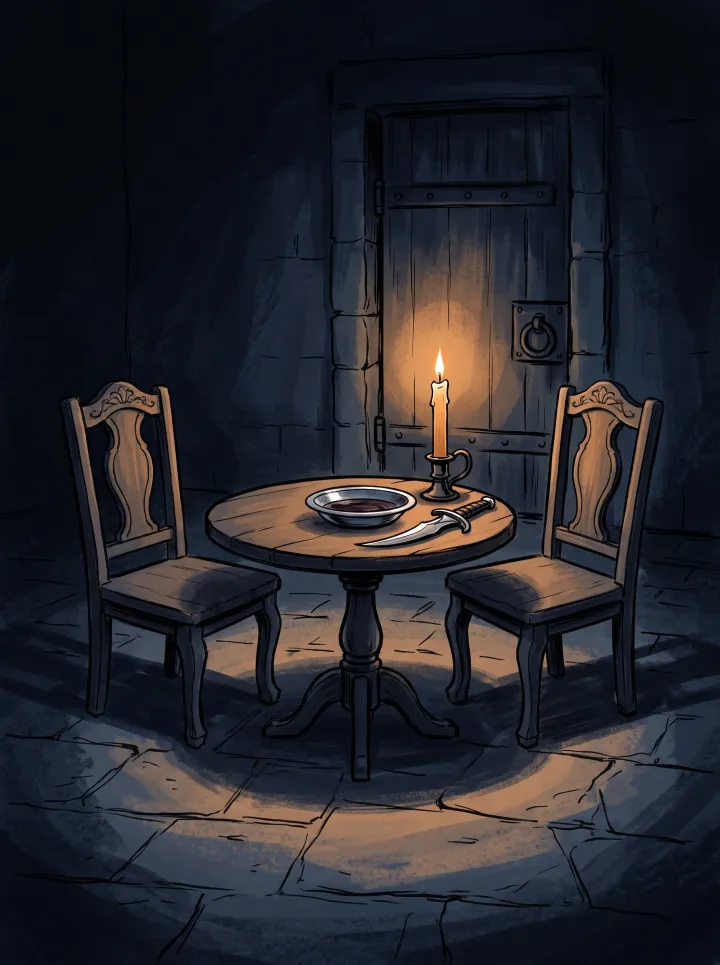
The oath has burned under your skin since sundown, a thin bright line from wrist to elbow. The same line burns on Maren Vask's arm.
The room they have given you was built for one. A window, a washstand, a bed. The door bolts from the outside, and somebody has bolted it without saying so.
"Sit down," Maren says, without looking up. "Keep pacing and you'll tear it open."
She is right, which is the annoying part. The oath keeps you both alive until the moon clears the eastern ridge — and it keeps you tied to each other. Too far apart and it pulls. Lie for too long and it burns. You have spent half the trial working out how much it notices.
You sit on the edge of the bed. She stays at the washstand, back to the wall, the way she sits in every hall you have ever seen her in.
"I have a question," you say.
"I know."
Out in the corridor someone walks up and stops outside the door. Not for long. Long enough.
Maren looks at you properly for the first time tonight, and the line on her arm brightens while she does it.
"Ask me before moonrise," she says. "After that I can lie."
- 1 Ask who proposed the oath — and why she agreed to it You chose
- 2 Go to the door and see who stopped outside it
- 3 Ask nothing, and let her decide how much to give away
- → Or decide for yourself — your story starts here
"The trial mistress," Maren says. "She offered it to me three days beforehand, alone, in her rooms. No name. Only: there is a second, and if you both take the oath you both live."
The line on her arm does not brighten. So it is true.
"And you agreed without knowing who I was."
"I agreed without knowing who you were." Now she looks at the window. "She told me the next morning. I had until noon to withdraw."
You wait.
"I didn't withdraw."
The oath pulls, briefly, the way it pulls when one of you is holding something back, and you cannot tell whether it means her or you.
"My turn," she says. "Why didn't you ask me outside, where nobody could hear us?"
Out in the corridor the footsteps move away. Quieter, then quicker, then gone.
And then a key turns in the lock.
Not open. Shut. A second time, deeper than the first — a different sound, a different iron.
Maren stands up. The line on her arm burns bright enough to throw shadows on the wall.
"That was not the trial mistress," she says. "She bolts once."
- 1 Answer her question honestly, while the oath still forces it
- 2 Test the door, now that it has been bolted a second time You chose
- 3 Ask what happens if the moon rises before you are finished
- → Or decide for yourself — your story starts here
Two bolts. You can feel them through the wood when you put your shoulder against it: the upper one is old and set, the lower is new, the iron bites too deep, somebody fitted it today.
Through the gap you can see the corridor. It is dark. There were lamps burning out there all evening, all four of them.
The oath pulls. Not as a warning — as pain, a line contracting like a tendon. You are too far from her, and the room is six paces long.
She comes because she has to. That is the humiliating part, and you both know it.
She stands beside you, closer than she would ever have chosen to, lays her hand flat on the wood and listens. Her breath goes past your temple. The pulling stops at once, as though someone had untied a knot.
"Four lamps," she says quietly. "Somebody put them out one at a time. That takes a while."
"Somebody who had time."
"Somebody who knew we were in here." She looks at you sideways, and because she is standing that close, she has to look up to do it. "And now you know why I agreed without the name."
Something has changed at the window. The eastern ridge, black against black all night, has acquired an edge.
Less than an hour.
- 1 Push the window open and look at the ridge while there is time
- 2 Ask who besides the trial mistress knows about the oath
- 3 Stay where you are and let the oath say what it wants You chose
- → Or decide for yourself — your story starts here
You stay where you are, hand still on the door, and you ask nothing more.
The oath takes what it is owed. That is how it works: it does not force an answer, it only forces that no lie gets through — and if you give it nothing for long enough, it helps itself.
Maren speaks first. It is not a confession; it sounds more like something she is reciting, something she has known by heart for years, and her voice steadies rather than falters. She says a sentence she has never said to anyone, and she finishes it without looking at you.
Then she waits. Not for an answer — for the pull that ought to come if any part of it were untrue.
It does not come.
Instead the line on her arm goes dark. At the wrist first, then to the elbow, like a coal burning through. Yours too. It does not hurt. It is simply over.
The moon is still behind the ridge.
"That can't happen," you say.
"No," Maren says, and for the first time tonight she sounds afraid. "Now we can both lie."
On the other side of the door, the lower bolt slides back.
Now play it yourself
The same opening, written again from scratch - and from the first decision onwards it is your story, not this one.
Start without signing up- No account needed
- Written natively, not machine-translated
- Free to start
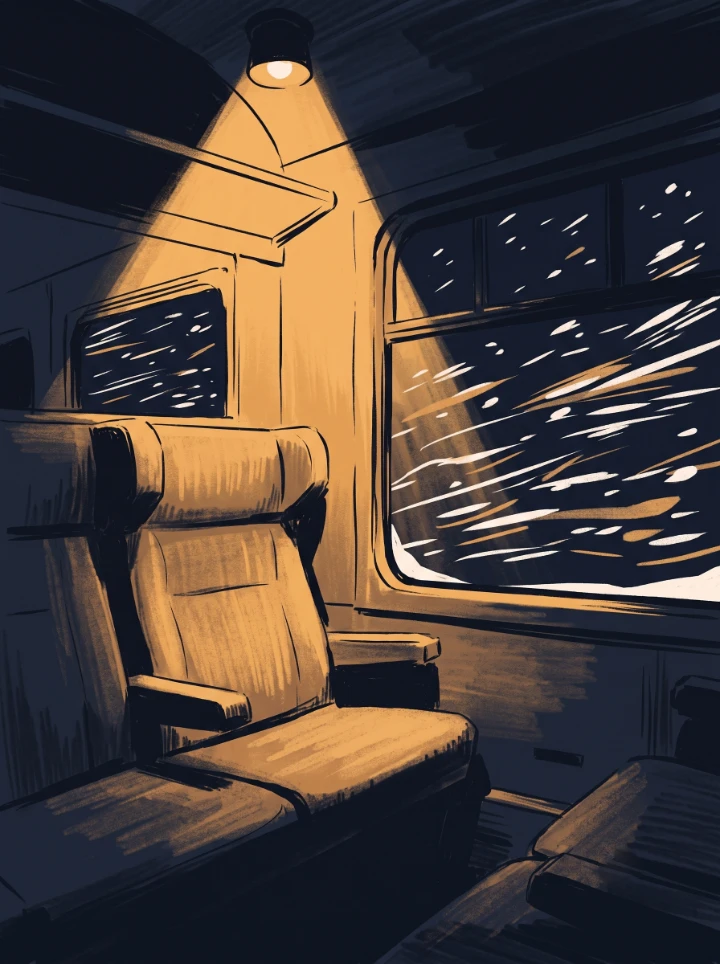 Crime
Crime
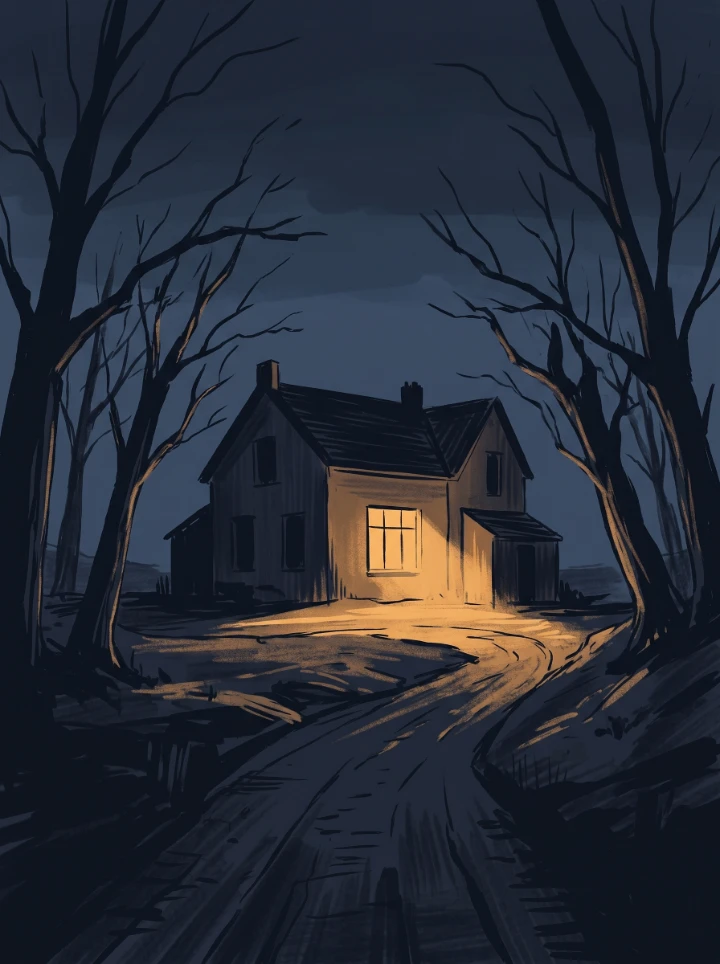 Horror
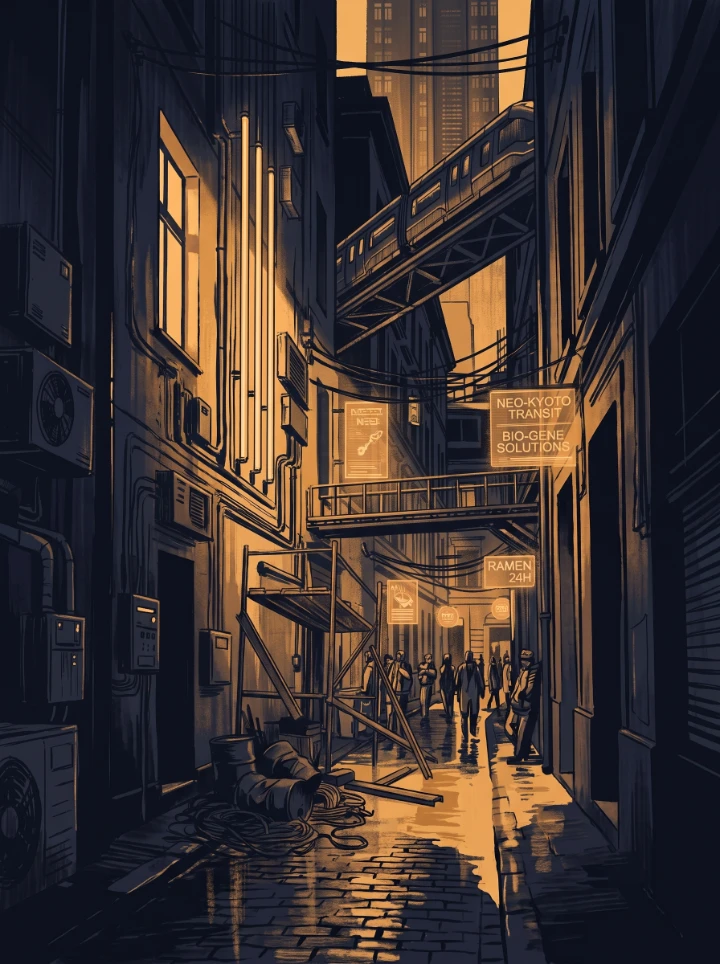 Cyberpunk
Romantasy where the decision is actually yours
That was not an extract. It is a recording: four sections and the three decisions between them, with the two roads not taken shown beside each. Ask at the door instead of testing it, and the night ends somewhere else entirely.
Romantasy runs on forced proximity: two people who did not get to choose that they need each other. That is hard to watch and good to play, because the interesting question is not what happens — it is what you say.
The Blood Oath gives you one night and a bolted door. There is no intended ending waiting to be found.
What to expect
- The text above is fixed - it is one recorded run, so you can read it without starting anything. In your own game it is written while you read, and no two runs are the same.
- Your choices really do branch the story - there is no single intended path to find.
- An AI writes it, not an author. It holds roughly 250 words per section, its memory of earlier sections is limited, and it occasionally drops a thread. If a section lands badly you can have it written again.
- Starting is free and needs no account. The free allowance is measured in tokens rather than turns, so how many decisions it covers depends on the story - roughly eight.