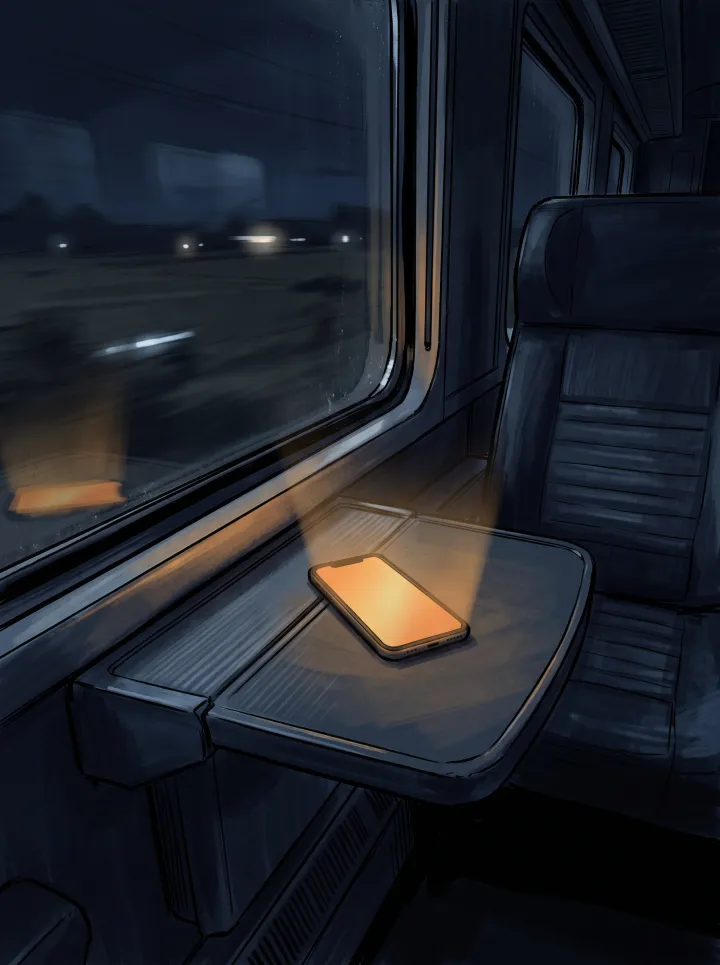
A text adventure is a game made of text. No graphics, no controls, no reflexes required – you read a scene, decide what happens next, and keep reading. The genre is older than most people assume, and it has changed enough in the last few years that remembering the old version doesn't help much.
1. Why so many people bounced off the old ones
If you know the genre from the eighties or nineties, you probably remember the typing. You wrote GO NORTH, TAKE LAMP, OPEN DOOR, and a program tried to match your sentence against a limited list of words it knew. Very often it failed. "I don't understand that" was these games' most common reply – the normal case, not the exception.
Which meant the real puzzle was rarely the puzzle. You already knew you wanted to tie the rope to the hook; you then spent ten minutes working out which three words the game would accept for that. This is where most casual players quit, and it's the main reason the genre spent decades as a specialist hobby.
2. How it works today
The decisive change: you don't type anything. You read a section – roughly half a screen, about 250 words – and underneath it are three concrete ways the story could continue. You click one. The next section gets written, building directly on what you chose.
Those three options aren't fixed in advance. They come out of the scene you just read, because a language model produces them together with the prose. If someone knocks at the door in your section, the options are about who's knocking and what you do – not about going north. The exact obstacle that broke the old genre is simply gone: there's no wrong input any more, because there's no input.
The text doesn't appear all at once, either. It streams in as it's written, the way a chat reply does, so you're reading along rather than waiting.
3. What you need
A browser. That's the list.
No download, no installation, no games platform, no account. It works on a laptop and equally well on a phone on the train, because nothing here needs fast reactions. A text adventure waits patiently – including when you stop halfway through a scene and come back three days later.
4. What you start with
This is where modern AI text adventures diverge most sharply from the old ones: there's no pre-built world you get dropped into. You supply the beginning yourself.
In practice that's two fields. A title – "The Night Train", "The House at the End of the Road", "The Blood Oath", whatever appeals – and one or two sentences of premise. For example: Winter 1954. A night train through deep snow, a body in the dining car, and you're the only person who can keep an eye on every suspect. That's genuinely all it takes. The first section grows out of those two sentences.
If nothing comes to mind, you can click one of the ready-made starting points instead. There's a handful of genres – crime, fantasy, horror, science fiction, cyberpunk, historical, post-apocalyptic, mystery, comedy, romantasy – each with its own cover art and a premise that already opens in the middle of a situation. One click and the story is running.
5. How long a session takes
As long as you want. A section takes a minute to read; a decision takes five seconds. A coffee break covers two or three scenes. There's no fixed number of turns and no mandatory ending – the story arrives at a natural stopping point eventually, or you simply stop and pick it up tomorrow.
If a section misfires – the AI strikes a tone that doesn't fit, or takes a turn that ruins the scene for you – you can have it rewritten without restarting the whole story. That matters more in practice than it sounds: it takes the randomness out without taking away the surprise.
6. It's closer to reading than to gaming
Worth setting the expectation properly. A text adventure of this kind sits nearer to a book than to a video game. There are no enemies, no score, no failure state in the classic sense. What you get is a story that adapts to you: the same premise played twice produces two completely different runs, because you turned differently at different moments.
Anyone who grew up with branching gamebooks – "if you open the door, turn to page 84" – already knows the principle. The difference is that page 84 isn't pre-printed here; it's written in the moment you decide. And there aren't a few dozen paths, there's no fixed number at all.
If a story turns out well, you can make it publicly readable behind a link and pass it on – whoever opens it sees the run your particular choices produced.
Just start one
Nobody has ever really understood this from an explanation; they understood it from the first section. Type a title, or click one of the ready-made starting points – free, straight in the browser, no signup and nothing to install.
Play for free now